娓娓唯唯|荷马
文章目录
引用来源:The Oxford History of Greece And The Hellenistic World, Chapter 2 Homer, Oliver Taplin(《牛津古希腊史》,第二章 荷马)
高中、大学和刚工作那会,周末基本到姑姑家和表哥混。最早有阵子玩 FC 的《霸王的大陆》,因为进度关系只能一人争霸,抓不到手柄的时候,跑去书柜随便找书看,荷马和仲马都是那个时候读的。
当时还是前互联网时代,没什么干扰,沙发上聚精会神坐几小时平常事。现在回想,好险。如果到今时今日再让我读这种大部头,我没有信心能坐得住。
但是那样的阅读,是有些潦草的,留下了很多困惑。《荷马史诗》,特别是《伊利亚特》,挺简单的一个故事,用许多重复的诗句进行冗长的叙事,阅读过程颇有些枯燥,它到底好在哪里?
当我读到这篇文章,我的问题得到了解答。套用一个标题:当我们谈论《荷马史诗》的时我们在谈论什么
我最初读的是中文版,觉得有必要就把中英文都列出来。需要注意的是,这本书的每一章是由不同的作者分别撰写的。
Preamble 导言
Even if ‘Homer’ is taken less as a person than as a historical context for the poems, there is little to be gained: we have no firm external evidence of Homer’s audience or circumstances of performance. It is inside-out to speculate and build up an external mould or framework called ‘Homer’ and then to try to fit the poems to it. The poems themselves are our firm evidence and they contain everything worth knowing about ‘Homer’. The poet and his audience must be reconstructed to fit around them. This internal approach from within the poems follows the motto of some ancient scholars, Homēron ex Homērou saphēnizein, ‘you should elucidate Homer by the light of Homer.’
如果说与其把“荷马”视为一个人,不如处理为一种诗歌的历史语境,那我们还是所获无几,我们没有关于荷马的听众或关于他吟唱环境的可靠的外部证据。我们完全是假设或构建出了一个所谓“荷马”的外部模式或框架,然后试图削足适履地将诗歌塞入其中。这些诗歌本身是我们的可靠证据,它们包含关于“荷马”的一切有价值的信息。诗人荷马及其听众一定是依循诗歌中的形象被重构出来的。这种从诗歌内部来探索的内证方法遵循了某些古代学者的箴言“ Homeron ex Homerou saphenizein”——“应该用荷马的光芒来阐释荷马“。
Homer’ is, then, for our purposes, the Iliad and the Odyssey. And what are they? They are narrative poems; they ‘tell a story’. But the interest lies not in the story, but in the telling, the way it is turned into literature. Rather than summarize the plot of the Iliad, I shall attempt some account of its thematic shape, of some of the fundamental concerns beneath the narrative, such as life and death, victory and defeat, glory and ignominy, war and peace. It is for these that the Iliad has won its fundamental place in European literature.
对我们的研究来说,“荷马”就是《伊利亚特》( Iliad)和《奥德赛》( Odyssey)。它们又是什么呢?它们是叙述性的诗歌,它们“讲述一个故事”。**但是我们关注的重点不在于故事,而在于其叙述,在于其转变为文学的方式。**我在这里并不概述《伊利亚特》的情节,而是试图对它的主题形式,对它的叙述背后的基本关注,如生与死、胜利与失败、荣誉与耻辱、战争与和平,做某些说明。正是这一切,奠定了《伊利亚特》在欧洲文学史上的基本地位。
The Iliad 伊利亚特
During the Iliad the gods travel far and wide, but they always converge on Mount Olympus. There they have their homes each built by Hephaestus, though they usually meet to feast and converse in the great palace of Zeus. It is an immortal world of feasting and splendour. The gods are deeply involved in the Trojan war and are not untouched by the sufferings of city, camp and plain below; but the contrast is still extreme. For the gods there are no crucial turning-points in past or future; their life is diluted by immortality.
在整个《伊利亚特》中,神灵们到处旅行,但他们几乎总是聚集在奥林匹斯山上。每个神灵在这里都有一座由赫淮斯托斯建造的宫殿,尽管他们经常在宙斯的宏大宫殿中欢宴或交谈。这是一个觥筹交错、光彩壮丽的不朽世界。神灵们都深深地介入特洛伊战争,丝毫不为下面城市、营地和平原中的痛苦所动,但反差却极其强烈。对于神灵们来说,没有什么至关重要的过去或将来,所以他们的生命因为不朽而平淡无奇。
The urge to gain heroic glory kills both Hector and his son, for it demands a loser as well as a winner. The Iliad never shirks this two-sidedness.
获得英雄般荣耀的激励最终要了赫克托尔和他儿子的命,因为英雄的荣耀既需要胜利者,也需要失败者。《伊利亚特》从来不回避这一点,不管是胜利者还是失败者。
Near the end of the poem Hera compares the two men:
史诗临近尾声时,赫拉比较这两个男子:
“Hector was mortal, and suckled at the breast of a woman,
while Achilles is the child of a goddess… you all
went, you gods, to the wedding…”
赫克托尔是凡人,吃妇女的奶长大,
阿喀琉斯却是女神的孩子
……天神们,你们都参加过婚礼
Hector is a great man; Achilles is mortal as other men, but there are ways in which he is close to the divine. He has possessions which were presents from the gods—his spear, his horses, the great shield and armour which Hephaestus makes for him in Book 18. His mother Thetis, caught between the two worlds, can tell him more than other men know, and can give him special help. She can even gain him special favours from Zeus, as is shown in the first book. Even so Achilles is a man and cannot see everything that this means. Only too late can he see:
赫克托尔是伟男子,而阿喀琉斯只是和其他男人一样的凡人,但是他有途径更接近神灵。他有神灵赋予他的财富——他的长矛、他的战马、第 18卷中赫淮斯托斯为他制造的大盾和盔甲。他的母亲忒提斯( Thetis)联系着两个世界,能够告诉他其他凡人所不知道的事情,能给予他特别的帮助。就像第 1卷中所展现的那样,她甚至能够帮助他获得宙斯的特别宠爱。即便如此,阿喀琉斯仍然只是个凡人,他不可能看清所有这些事情。当他看清的时候,为时已晚:
My mother, all these things the Olympian has brought to
accomplishment.
But what pleasure is this to me, since my dear companion
has perished …
母亲啊,奥林帕斯神实现了我的请求,
但我又怎能满足,我最亲爱的同伴被杀死
There is one thing, however, which Thetis can tell Achilles for certain, while for all other men it remains the great unknown. He has a choice of long life or young death, which is also a choice between uneventful obscurity and eternal glory
然而,有一件事情是忒提斯能够确定告诉阿喀琉斯的,而其他凡人绝不能知晓。那就是他可以选择长生或者早死,也就是在低微的平淡和永恒的荣耀之间做出选择
So when Achilles decides, without hesitation (‘then let me die soon’, 18.98), that he must return to the fight for vengeance on Hector, he does so without any doubt that his own death will follow soon after. Hector, on the other hand, must, like everyone else, hope against hope for a long and prosperous life. Even when the dying Patroclus prophesies his death, Hector retorts:
因此,当阿喀琉斯毫不犹豫地选择(“那么,让我赶快死吧”)之时,他必须回去战斗,向赫克托尔复仇,也就毫无疑问会很快死去。另一方面,赫克托尔肯定也和任何其他人一样,对永生而荣耀的生命抱着一线希望。尽管帕特洛克罗斯之死已经预示了他的死亡,赫克托尔还是反击说:
Patroclus, what is this prophecy of my headlong destruction?
Who knows if even Achilles, son of lovely-haired Thetis,
might before this be struck by my spear, and his own life perish?
帕特洛克罗斯,你怎么说我死亡临近?
谁能说美发的忒提斯之子阿喀琉斯
不会首先在我的长枪下放弃生命?
Even when he faces Achilles he maintains that the battle is not a foregone conclusion; and it is only at the last minute that he realizes that this is indeed the end. But it is then, when he knows he has lost and when he has no aid from god or man, that Hector shows his finest heroism:
即使在面对阿喀琉斯之时,他还是坚持认为这次战斗没有一个预定的结局,直到生命的最后时刻,他才意识到这确实是最后的结局。但是在这个时候,当他知道自己已经输了,不会有神灵或凡人来救助他的时候,赫克托尔展示了最豪迈的英雄主义:
Let me at least not die without a struggle, inglorious,
but do some big thing first, that men to come shall know of it.
我不能束手待毙,暗无光彩地死去,
我还要大杀一场,给后代留下英名。
Hector loses, and yet he still wins immortal fame. He wins it because of the quality of his life and of his death. The Iliad is not so much concerned with what people do, as with the way they do it, above all the way they face suffering and death.
赫克托尔输了,但是他仍然赢得了不朽的声誉。他赢了是因为他生与死的高质量。《伊利亚特》所关注的不是人们做什么,也不是他们做这些事情的途径,最重要的是它关注人们面对苦难和死亡时的方式。
Achilles is the greatest warrior, the greatest looter and killer of all. But what makes him great is not that, but the uniquely penetrating way in which he thinks matters through. He sees and expresses the human condition without evasion or periphrasis. We feel this quality when he refuses compromise in Books 1 and 9, and when he shows no mercy to Lycaon in 21 nor to Hector in 22.
阿喀琉斯是最伟大的勇士,也是最厉害的掠夺者和杀手。**但是使他伟大的并不是这些,而是他思考问题时的独特敏锐性。他没有逃避或迂回地看待和表达人类的处境。**当他在第 1卷和第 9卷中拒绝妥协、在第 21卷和 22卷中对利卡翁( Lycaon)和赫克托尔丝毫不宽恕的时候,我们感觉到了他的这种品质。
For as I detest the doorways of death, I detest that man, who
holds one thing in the depths of his heart, and speaks forth another.
有人把事情藏在心里,嘴里说另一件事情,
在我看来像冥王的大门那样可恨。
But it is this same quality that leads to his treatment of Priam in Book 24, when, as Alfred Heubeck has put it, ‘the image of the great man replaces that of the great hero.’ Achilles sees, and brings the old father Priam to see, that it is the human lot to be bereaved, to endure—and as tokens of this to eat, drink, make love, and sleep. These things transcend the barriers which break men up into individuals and nations.
也正是这种品质,决定了他对普里阿摩斯的态度,就如阿尔弗雷德·胡贝克( Alfred Heubeck)所指出的那样:“伟人的形象取代了伟大的英雄。”阿喀琉斯看清了,并且也让老父亲普里阿摩斯看清了,人注定要有生有死,要经受困难,就像人必须要吃饭、喝酒、做爱和睡觉一样。这些东西超越了将人们分成不同个体和不同种族的障碍。
So Homer wins immortal glory in rather the same way as his finest characters, by going beyond the mere narrative achievements of killing and derring-do. He sets mighty deeds in a context of defeat as well as victory, woman as well as man, peace as well as war, doubt as well as confidence, feeling as well as action.
因此,荷马也同样以最好的方式赢得了永恒的荣耀,超越了仅仅描述杀戮和蛮勇的成就。他为这些伟业所置的背景既有胜利也有失败,既有男人也有妇女,既有战争也有和平,无疑还有信心、情感和行动。
📝 按:
我想罗曼·罗兰一定是读过《荷马史诗》的。
这一段一气呵成,读得也痛快,一边读身上一阵阵的 thrill(激灵?),当时阅读《荷马史诗》某些隐隐约约的感觉又重新回到脑海里,而且变得再清楚不过。
这是很好的文学评论。搜索作者的信息,他并没有被冠以“历史学家”的头衔。历史书只能全部由历史学家来撰写,这是我之前的阅读经验得来的刻板印象。
电影《特洛伊》热映那阵,是有很多人取 Achilles 做英文名,多到我走在路上怕踩到别人的脚后跟,和乌龟。我读完《伊利亚特》时的感想,阿基琉斯是很酷炫,但赫克托尔也是不应该被忽视的好男儿。要取英文名,我更倾向 Hector。阻止了我的是 Merriam-Webster’s Vocabulary Builder:
hector: To bully or harass by bluster or personal perssure.
…… His name began to take on its current meening only after gangs of bullying young rowdies, many of them armed soldiers recently released from service following the end of English Civil War, began terrorizing the residents of late-17th-century London. The gangs took such names as the Roysters, the Blades, the Bucks, and the Bloods, but the best-known of them was called the Hectors.
看来这是「汉尼拔」之前的另一个流行文化惨案。美剧里墨西哥贩毒集团首领的首席副手/打手/杀手/刽子手常常也叫赫克托是否也承袭了这个典故呢?总之这种“王子殿下的随从”式的名字我是不会选的。
最近大家吐槽华人爱取 Jason 做英文名,然而追根溯源的话,Jason 就是希腊神话里的陈世美啊。也许是因为书里一般取旧译名「伊阿宋」,又或者是故事篇幅有点长,电影版「阿尔戈英雄传说1:寻找金羊毛」票房一般,如果有一天「阿尔戈英雄传说2:英雄的家庭生活」上映,可能就不会有这么多人重名了。当然,更大的可能其实就是某明星叫 Jason 吧。
扯回来,阿基琉斯是英雄,这是一层;赫克托尔更是英雄,这又是一层;阿基琉斯也还是英雄,这是我以前没有考虑周全的另一层。
不去考虑演员所谓的 C 位,好的电影海报应该是这一张
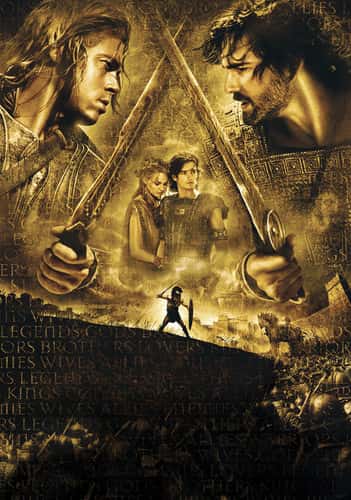
The Odyssey 奥德赛
In the Iliad noble heroes move inexorably, by way of a combination of choice and of forces beyond their control, towards destruction and dissolution. We are left with mourning, honour, endurance, and pity. In the Odyssey a somewhat dubiously heroic hero wins his way through various fantastical hazards by means of trickery and ingenuity. The Odyssey is not exclusive; it has room for travel, for rustics and servants, for low life, and for dastardly villains. Its overall movement is away from war and from barbarity towards prosperity and peace, centred on the wife and a happy domestic scene. We are left with celebration and poetic justice, with loyalty and perseverance and intelligence rewarded. The beggar has turned out to be Odysseus in disguise, home at last.
在《伊利亚特》中,显赫的英雄以冷酷无情的方式走向毁灭和死亡,驱使他们的是个人选择以及无法控制的力量的结合,留给我们的是悲恸、荣耀、苦难和怜悯。而《奥德赛》中的英雄却不是那么英雄气十足,他会通过欺骗和计谋来避开各种奇异的危险。**史诗《奥德赛》并不是孤高的,它有旅程的空间,也有乡村和仆人、低贱的生活,还有卑劣的恶棍。**它所有的情节都远离战争与残酷,而朝向繁荣与和平进展,致力于妻子和一个幸福家庭的生活场景。它给我们留下的是胜利的庆典和理想的赏罚以及对忠诚、坚定不移和聪明才智的回报。最后,乞丐变成了奥德修斯回到家里。
The first word of the Odyssey is andra, ‘the man’, and that man is far more directly the core of the poem than ‘the wrath of Achilles’ is of the Iliad.
《奥德赛》中最重要的词汇是“人”( andra),这里的人比《伊利亚特》的主题“阿喀琉斯的愤怒”更接近人的本质。
Odysseus left Troy a great hero. We hear from Demodocus of his finest hour at the sack. But as his travels go on he loses his treasure and his companions. To escape the Cyclops he even toys with losing his name.
奥德修斯为特洛伊留下一位伟大的英雄。我们从德摩多科斯( Demodocus)那里听到了他在特洛伊城陷落时所经历的最荣耀时刻。但是随着他归途的延展,他失去了财富和伙伴。为了逃避独眼巨人,他甚至失去了自己的名字。
The Odyssey is not, then, only a journey of physical endurance for Odysseus; the survival of his heroic stature and his reputation are put to the test. He has to come back from the very verges of civilization and of humanity; and to do so he has to show patience as well as cunning.
当然,《奥德赛》并不仅仅是关于奥德修斯身体历经苦难的旅程,他的英雄气概和声名荣誉同样经受了考验。他从文明和人性的边缘回归,在展现自己的狡黠的同时也显示了自己的耐性。
The pleasure we take in the Iliad is the pleasure proper to tragedy, the salvage of humanity amid destruction: the Odyssey indulges our optimism, our hopes that all will turn out to be well, that the strange beggar will set all to rights.
我们从《伊利亚特》中得到的愉悦实际上是一种悲剧性的愉悦,那就是在毁灭中还有对人性的抢救,而《奥德赛》则放大了我们的这种乐观,我们希望所有的愿望都能实现,希望这位陌生的乞讨者能把一切处理妥帖。
📝 按:读完《伊利亚特》后接着读《奥德赛》,能明显感觉到两者的不同。你不会多做犹豫就成为阿基琉斯的支持者,但和奥德修斯的“连接”却会让你踌躇良久。你不喜欢奥德修斯,但也谈不上讨厌。你会为他遭遇的磨难感到同情,为他逃离险境感到欢喜,但他的一些阴谋诡计又会激起你的厌恶。如果《伊利亚特》是丰满的理想,《奥德赛》就是骨感的现实,包含了更多的人间烟火。
The Tradition 传统
The idea that dozens of nameless bards have made their contribution to Homer is an attractive one. The poems become the achievement of a group or guild. But Milman Parry and some of his successors have been carried away by this ‘folkist’ romance, and have become so set on the notion of traditional poetry that they have denied all individuality to the bard within it, adding that such a tradition has no place or value for originality. For them ‘Homer’ is the tradition, handed down over the centuries. This runs into problems, if only because the tradition must somehow have developed and grown; it cannot have instantaneously sprung into mature existence. And, unless it is maintained that all of Homer’s rivals, earlier or contemporary, all produced poetry just as good as his—in fact indistinguishable from it—then there must have been ways in which Homer was better. The ways in which he was better than the others constitute his originality. So, however much he was within his tradition, he must also have improved on it.
许多无名的游吟诗人都为荷马史诗做出了自己的贡献,这无疑是一种颇具吸引力的观点。史诗成为一个群体或一个行业的功绩。但是米尔曼·帕里和他的一些追随者太过于依赖这种“民间”传奇,以至执着于传统诗歌的观念而否认所有游吟诗人在其中的个人作用,并且认为这种传统没有创新的余地,也没有创新的价值。对他们来说,“荷马”就是传统,就是数百年传下来的传统。这种观点的问题在于,如果仅仅因为传统不知何故必须发展和成熟,那么就不能瞬间就跃迁至成熟状态。况且,除非认为所有荷马的竞争者,不管早期的还是同时代的,他们创作的诗歌都和荷马的作品一样好——实际上是没法区分的——否则一定有某种因素使得荷马的作品更胜一筹。这种因素就是就是他的创新之处。所以,不管他吸收了多少传统的因素,他一定对其做了改进。
📝 按:这个思路是不是也能应用于对四大名著作者的解读?虽然作为普通读者我其实不是很关心具体是哪只奶牛。倒是可以借鉴本文作者前面评论的角度和手法,现在特别想到的是《水浒传》,如果早点读到本文的话,我应该能写一篇不错的语文课暑假读书报告。
The question now is, how far was Homer the servant of his tradition, how much its master? Must he have worked entirely with it and within it, or might he have worked against it also? It is still an open question, indeed, whether very long epics were a centuries-old norm or an invention of Homer; whether or not something very like the Iliad or the Odyssey could have been heard generations before Homer.
现在的问题是,荷马在多大程度上承袭了传统,承袭的内容又有多少?他必须完全与传统一致或者在传统之内创作,抑或他也可以站在传统的相对面?诚然,这仍然是一个未能解决的问题,这么长篇幅的史诗究竟是一个数世纪积淀的规范还是荷马的创造,在荷马之前的几代人是否已经听过某些类似《伊利亚特》和《奥德赛》的作品?
We have not got any of the poetry of Homer’s predecessors or rivals, and so nothing much can be said with confidence; that this or that was innovative or anti-traditional on the part of Homer must remain a speculation. ……
我们不知道任何有关荷马的前辈或竞争者的情况,因此我们对以上问题没有任何把握,荷马作品中哪些部分有创新或反传统之处仍然是一个需要商榷的问题。……
…… but in Homer the unobtrusive reiteration of such characteristics seems perfectly natural. Thanks to the repeated phrases and scene-sequences we are in a familiar world where things have their known places. It is a world which is solid and known, and yet at the same time coloured by the special diction with an epic nobility. Robes, beds, sheep, springs, mountains—their constancy is conveyed by the traditional language. The sun rises each day in familiar terms; Achilles remains swift however inactive he may be. Set against this formulaic backcloth are the unique, terrible events. The sun sets as ever, but Hector is dead. In Homer we have a supremely pervasive counterpoint of static and dynamic, the constant and the ephemeral. This owes much to the essential style of the poetry.
**然而,对荷马来说,这种特性的适度重复看起来是那么自然。由于这些重复的习语和场景次序,我们进入到一个非常熟悉的世界,对每一件事物的位置都了若指掌。**这是一个固定的已知世界,然而同时又因为其特有的高贵的史诗语言而彰显出多姿多彩来。长袍、床笫、绵羊、大山——这些事物的恒久不变通过传统语言得以展现。太阳每天按照固定的轨迹升起;阿喀琉斯敏捷如昔但是又任性怠惰。**一旦这些固定的背景发生变化,就会发生独特的、可怕的事件。**太阳照常下山了,但是赫克托尔死了。在荷马那里,我们看到了许多静态与动态、永恒与短暂的对应。这些都得益于诗歌的本质风格。
📝 按:当时阅读的时候,感觉一是翻译后语言的晦涩,二是大量看似啰嗦的重复,并没有想过这些重复的必要性。
Homer and History 荷马与历史
It seems to me simple-minded to conclude from this that Fate is superior to Zeus because Fate must tip the scales. In the context it is clear that the scales do not determine who will win, but when Achilles will win. The outcome of the battle is already put beyond doubt by many other factors, human, divine, and poetic: the scales mark a dramatic turning-point. It is at this point that Apollo leaves Hector and Athena joins Achilles. But it would again be a theological over-simplification to conclude that the battle is merely divine puppetry without any place for human achievement. The gods do not change the outcome of the battle. Nor do they diminish the victory or the defeat; on the contrary their interest and participation elevate them. Great heroic deeds are marked by the attention of the gods. So the golden scales are neither a real theological belief nor mere picturesque ornament; they are the elevation of a turning-point.
在我看来,如果因为是命运来决定秤盘的倾斜就说命运要比宙斯更强大,无疑太过简单了。很明显,在文本中秤盘并没有决定谁会赢,而是在这个时候阿喀琉斯就要赢了。战争的**结果其实已经由人和神等诸多因素决定了,诗歌中的秤盘只是一个戏剧性的临界点而已。**正是在这个临界点,阿波罗抛弃了赫克托尔,雅典娜也为阿喀琉斯得胜而欣喜。**但是如果就此认为战争仅仅是神灵的傀儡而没有任何人类功绩的位置,那也是一种神学上的过度单纯化。**神灵并不改变战争的结果。他们并没有使胜利或失败减少,相反,他们的兴趣和参与还使之得以增加。伟大的英雄业绩得到神灵更多关注。因此,黄金天秤既不是一个真实的神学信仰,也不仅仅是一个独特的装饰品,而是一个临界点的提升。
📝 按:如果把「神灵」设想为某种中性的「无形之手」……
The conclusion that the Homeric world is through and through on every level a poetic amalgam is in no way inconsistent with its having exerted a powerful influence on the real life of the Greeks over the next 1,000 years after its creation. Homer provided one persuasive, universally known, and inspiring model of heroism, nobility, the good life, the gods. Homer affected history. But it is not by being a faithful representation of history that his world-picture has captured the imagination of so many people for so long. It is much more memorable and universal than that.
如果认为荷马的世界在各个层面上从头到尾都是一种诗性的融合,这样的结论并不符合实际,与荷马史诗被创作出来以后的 1000多年里对希腊人的真实生活所产生了巨大影响不符。众所周知,荷马史诗为人们提供了一种可信的、广为人知的知识,灌输了一种关于英雄主义、高贵、有益的生活、神灵等内容的模式。荷马史诗深刻地影响了历史。但荷马并不是对历史的真实再现,他的世界图景长久以来俘获了如此多人的想象。这种影响远比真实再现历史更有意义、更具普世性。
There does remain, however, one time and place in history which Homer tells us about, though indirectly. There must have been an occasion for the creation of the Iliad and Odyssey. The very fact that they came into existence says a lot about the concerns and sensibilities of Homer’s own audience. For I take it as axiomatic that these great works of art would never have come into existence without an audience. There must have been people who were willing to pay attention to these poems, to make the trouble worth Homer’s while by listening to them properly—and quite likely by supplying his livelihood also. They must have been able to appreciate Homer: otherwise he would never have made the poems. ……
然而,仍然有一个历史上的时间和地点是荷马告诉我们的,尽管不是直接的告知。必然有一个创作《伊利亚特》和《奥德赛》的历史时期。史诗开始存在的事实告诉我们许多关于荷马自己的听众所关心和敏感的事物。不言自明,如此伟大的艺术作品不可能在从来没有一个听众的情况下开始存在。必然有人愿意去关注这些史诗,当他们用心去聆听的时候,他们也会为荷马之忧而忧,也可能去资助他的生计。他们必然也懂得欣赏荷马,要不然他就不会去创作这些史诗。……
📝 按:
有个舅舅曾经从军。他说起从前(80 年代?)去北方的农村招兵,去到家里都“有书”。我猜会包括《三侠五义》、《隋唐演义》、《杨家府演义》、《说岳全传》之类的书目。这些作品宣扬的「忠」、「义」可以被加上「愚」的前缀斥为封建糟粕,但是封建的侠义故事式微,兴盛的却可能是现代的《古惑仔》故事。
传统是一种自然生长的东西,即使某个时期似乎坏处超过了益处,连根拔起用新生的事物完全替代是否是好的解决方案呢。终究还是有人会需要英雄故事,不论是荷马,又或者是海马、斑马。那么,属于我们的英雄史诗是什么?
文章作者 Weiwei
上次更新 2018-12-13